When AllRead started in 2019, the premise was straightforward: gate automation at ports and terminals shouldn’t require a construction project. No structural overhaul. No specialist hardware. No months of civil engineering. Just software, off-the-shelf cameras, and deep learning OCR applied to the information that every container, truck, and rail wagon already carries: a code, a symbol, a shape, a direction.
Seven years later, AllRead has crossed 100 active OCR installations in production across 14 countries. The number is worth pausing on — not as a marketing exercise, but as a record of what software-based OCR can achieve when deployed at operational scale.
What 100 Installations Actually Represent
The 100-gate figure is not 100 versions of the same problem. Across 14 countries — eight in Europe, six in Latin America — AllRead operates in container terminals, intermodal terminals, inland terminals, rail terminals, RoRo terminals, agro terminals, depots, and port authority infrastructure. Each environment presents a different configuration of assets, layouts, lighting conditions, and operational constraints.
In Europe, installations are running in Spain, Portugal, France, Germany, Italy, Sweden, Bulgaria, and the United Kingdom. In Latin America, in Chile, Argentina, Brazil, Mexico, Ecuador, and Venezuela.
Named clients include the Port Authority of Bilbao and Port Authority of Valencia in Spain; LHTE — Le Havre Terminal Exploitation in France; HGK CTS Terminal and Niedersachsen Ports in Germany; Hutchison Ports BEST; Terminal 6 in Argentina; and EPSA (Port of San Antonio) in Chile.
The milesto
Beyond Gate OCR: What the System Actually Reads
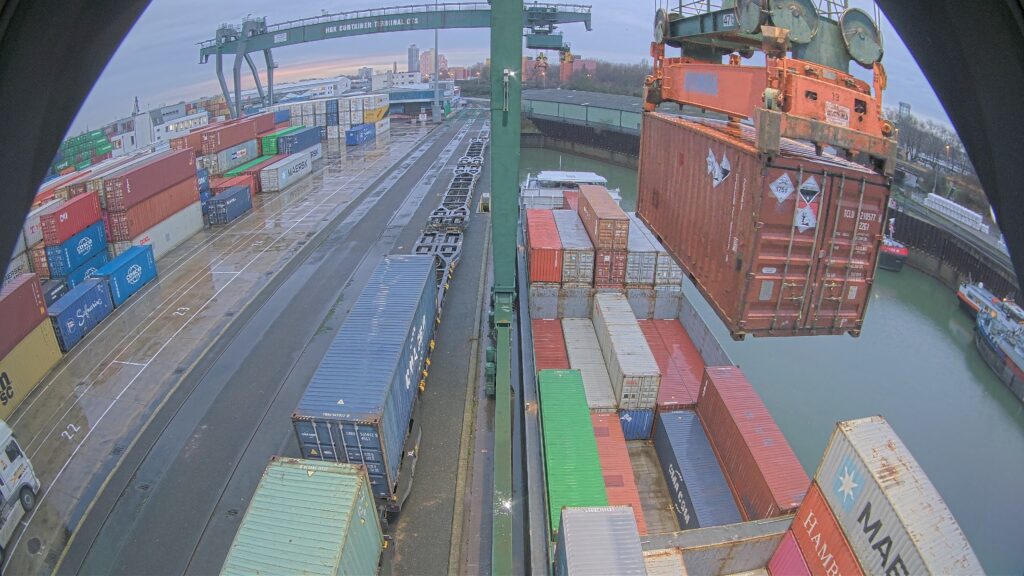
ne covers more than container code recognition at road gates. On road, ARS© Road captures container BIC codes, vehicle licence plates, ISO codes, tare weight markings, and detects ADR and IMO dangerous goods labels and security seals — simultaneously, per transit, delivered in real time to the terminal’s TOS or the port authority’s PCS.
On rail, ARS© Rail identifies wagon UIC codes, container codes on wagon loads, and train composition data, integrated with systems including Zedas, Navis, Winspot, Scorpio, nGen, PCIS, and Infoport. On crane and ship-to-shore operations, ARS© Crane handles container identification at the quayside.
In every case, the system delivers what matters operationally: consolidated per-transit intelligence — who entered, what they carried, whether there were anomalies — fed directly into the port’s existing digital infrastructure. On-premise. With forensic image records attached.
Reading accuracy exceeds 97% across road, rail, and crane deployments under real operating conditions: dirty codes, damaged containers, moving vehicles, low-visibility environments. That figure is not incidental — improving on the accuracy benchmarks that traditional OCR systems had established was a design objective from the start, not a secondary outcome.
Hardware-Agnostic OCR: What a Software-Based Approach Enables at Scale
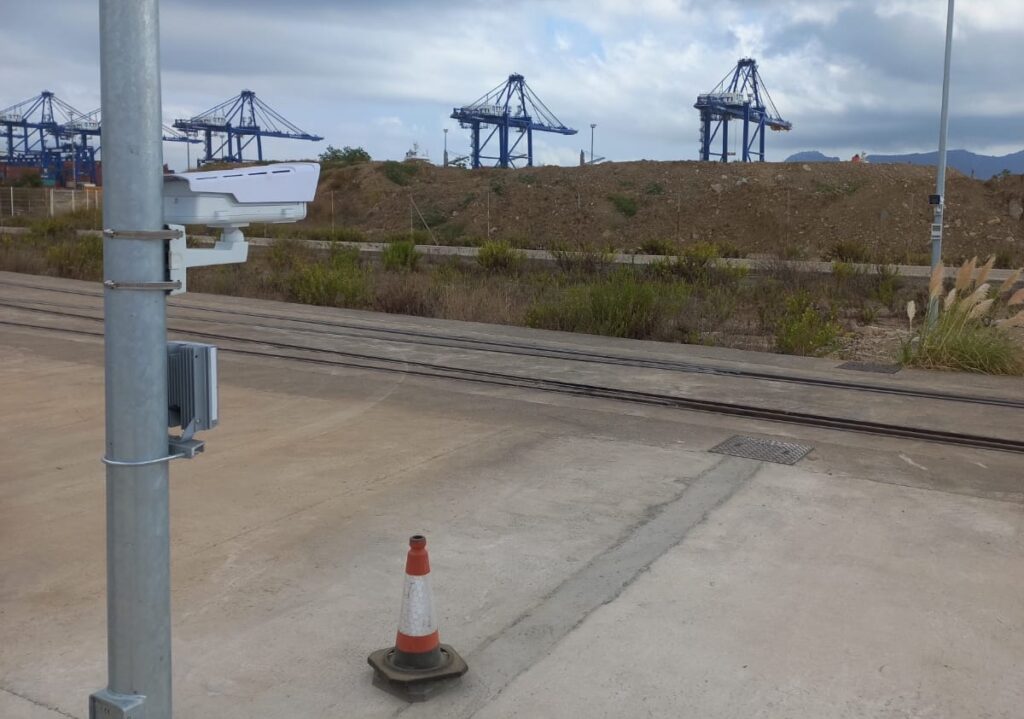
The consistent factor across 100+ installations is infrastructure — or more precisely, the absence of it as a constraint. AllRead deploys on off-the-shelf cameras, whether pre-installed or newly placed, mounts on standard poles or streetlights, and requires no minimum space for installation. There is no, or limited, civil engineering prerequisite. The system installs on a local server at the terminal.
This hardware-agnostic OCR architecture matters at scale because it means the deployment model does not change as it rolls out across different countries, terminal types, or operator sizes. A container terminal in Bilbao and an agro terminal in Ecuador face different operational challenges; they do not need different infrastructure investment to automate their gates. The same software-based OCR engine, the same deep learning OCR models, the same integration framework.
This also makes OCR retrofit straightforward. Terminals that already have cameras installed at their gates — and most do — do not need to replace them. AllRead’s system runs on what is already there, or on low-cost additions, delivering intermodal terminal automation without the capital commitment that historically made it inaccessible to smaller operators.
The result is a cost structure that is 60 to 80% lower than traditional OCR systems in acquisition and maintenance terms — which directly determines which operators can afford to automate. AllRead’s position from the start has been that gate automation should be accessible to ports of any size, not only to those with capital for large infrastructure programmes. The 100-installation figure is partly evidence that this model works commercially as well as technically.
What This Scale Reveals About the Remaining Problem
Crossing 100 installations is also a vantage point. From it, what becomes clear is how much gate automation remains to be done across global port infrastructure.
Manual processes — operators transcribing codes by hand, visual inspections without digital records, gate queues caused by identification errors — are still the norm at many terminals. The cost of that manual process is measured in turnaround time, in compliance risk, in security blind spots. Every transit that passes through a gate without being automatically identified and recorded is a gap in the terminal’s operational intelligence.
The technology to close that gap exists. It has been demonstrated in production, at 100+ sites, across three continents, in conditions that range from the dockside fog of Le Havre to the operational intensity of Hutchison Ports BEST’s container throughput.
A Note on the Milestone Itself
Adriaan Landman, CEO of AllRead, shared the 100-gate milestone publicly with a deliberate observation: “This milestone belongs to every port and terminal team that trusted us.”
That framing is accurate. Every production deployment required a port or terminal to accept that a software-based OCR system — lightweight, running on off-the-shelf cameras, without the physical bulk of traditional OCR gate structures — would deliver accuracy above 97% in live operations. That decision, made by operations directors and port authority teams across 14 countries, is what the milestone represents.
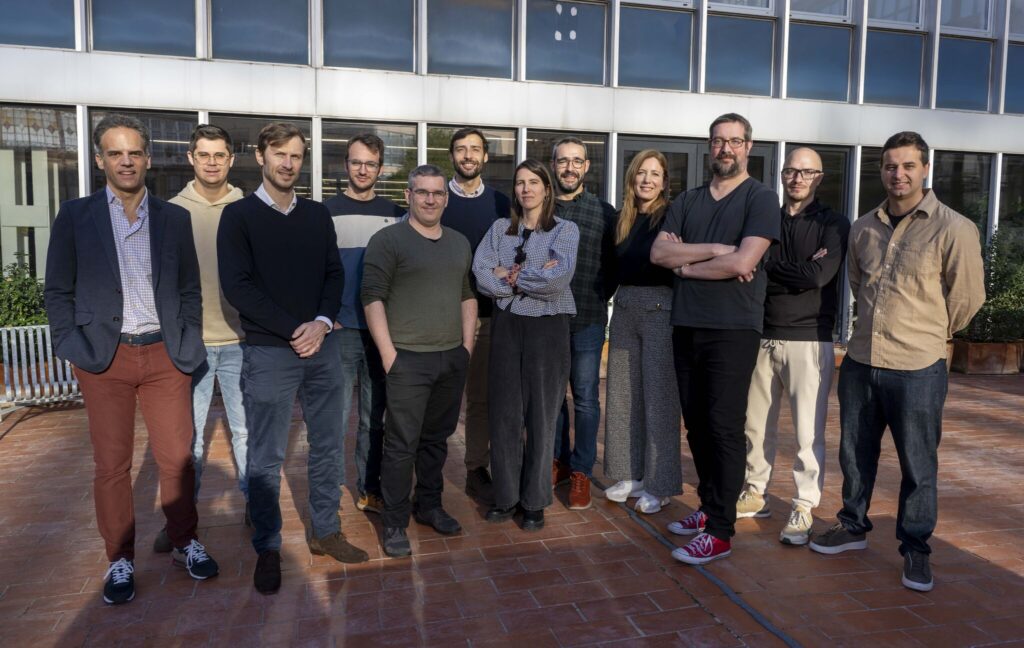
The AllRead team builds and maintains the technology. The terminals put it into production. The milestone belongs to both.
Operating a port or terminal in Europe or Latin America? Let’s talk about what 100+ deployments have taught us.