In the port and intermodal industry, retrofit is a faster and more sustainable way to automate critical operations — without civil works, without dismantling equipment, and without disrupting day-to-day operations.
What is retrofit in port access control?
At a port or terminal, retrofit means turning existing transit points — gates, pre-gates, secondary accesses with CCTV cameras already in place, cranes that have been operating for decades — into digitalised assets equipped with state-of-the-art computer vision (“OCR”) systems, without replacing the physical equipment. Making smart what already exists. It is the opposite of the traditional rip-and-replace model: a fully new installation with proprietary gates, dedicated cameras, and the civil works required to support them.
Retrofit relies on a software layer that extracts value from hardware already installed, capturing data and feeding it into the terminal’s information systems (GOS, TOS, PCS) in real time.
Why retrofit? When does it make sense?
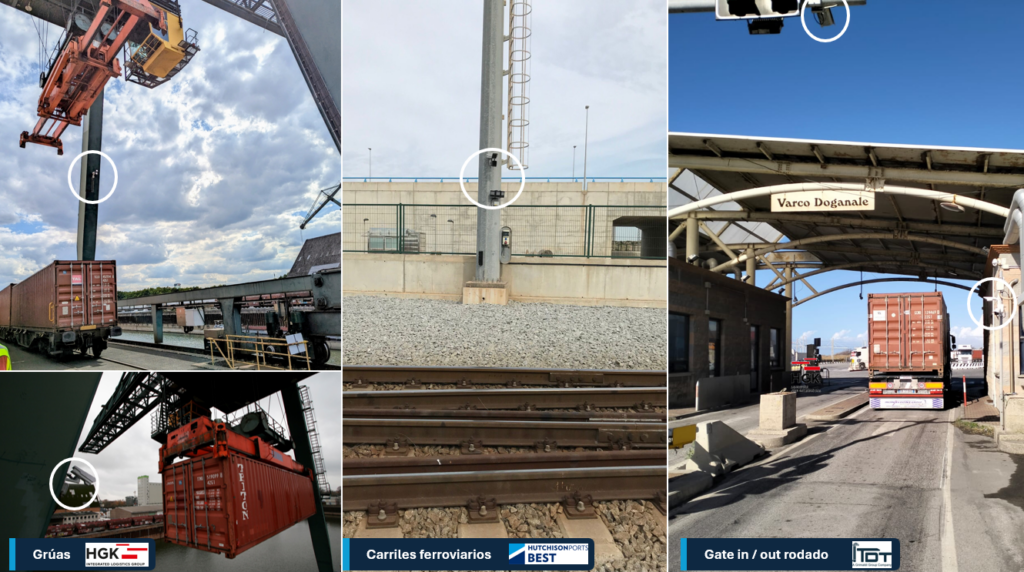
Three typical scenarios justify a retrofit instead of a full replacement:
- Depreciated but functional assets: cranes more than 10 years old that still operate well but feed no automatic data into the TOS.
- End-of-life systems with poor performance: legacy OCR installations with declining accuracy and maintenance that has become expensive or unviable.
- Control points without digital coverage: secondary accesses where OCR was never deployed because investment in gates could not be justified.
In all three cases, retrofit makes it possible to move forward without entering a long cycle of dismantling, civil works, and operational interruptions
Three concrete advantages over full replacement
1. Economic ROI
Retrofit drastically reduces CAPEX. Investment is concentrated on software, integration, and at most minor hardware (lights, edge servers, IP cameras). Payback is measured in months, not years.
2. Environmental impact
Every OCR gantry that is not manufactured saves steel, concrete, electronics, and transport. For ports with ESG commitments, extending the useful life of existing infrastructure is the consistent choice: the most sustainable emissions are those that are never generated.
3. Speed of implementation
A typical retrofit is deployed in 2 months, compared to the 12 months of a new installation with civil works. The decision stops being a multi-year project and becomes a measurable improvement within the fiscal year.
Three real retrofit cases with AllRead
Port of Bilbao — access control retrofit with ALPR and OCR
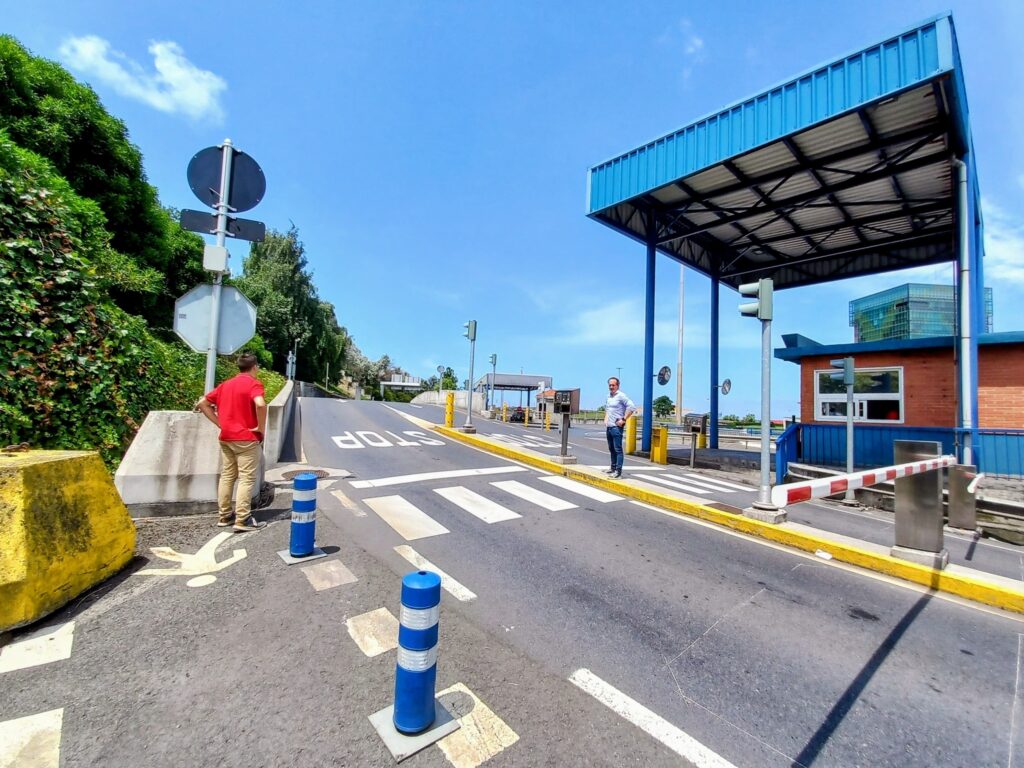
The Port Authority of Bilbao needed to digitalise access control and dangerous goods traceability. AllRead integrated with the existing ALPR infrastructure, adding no more than a single camera to read in real time BIC container codes, tractor and trailer license plates, and ADR/IMO/UN dangerous goods codes, connecting to the gate operation system (Zutabeport + Honeywell).
HGK CTS Terminal (Germany) — a 30-year-old crane digitalised with two cameras
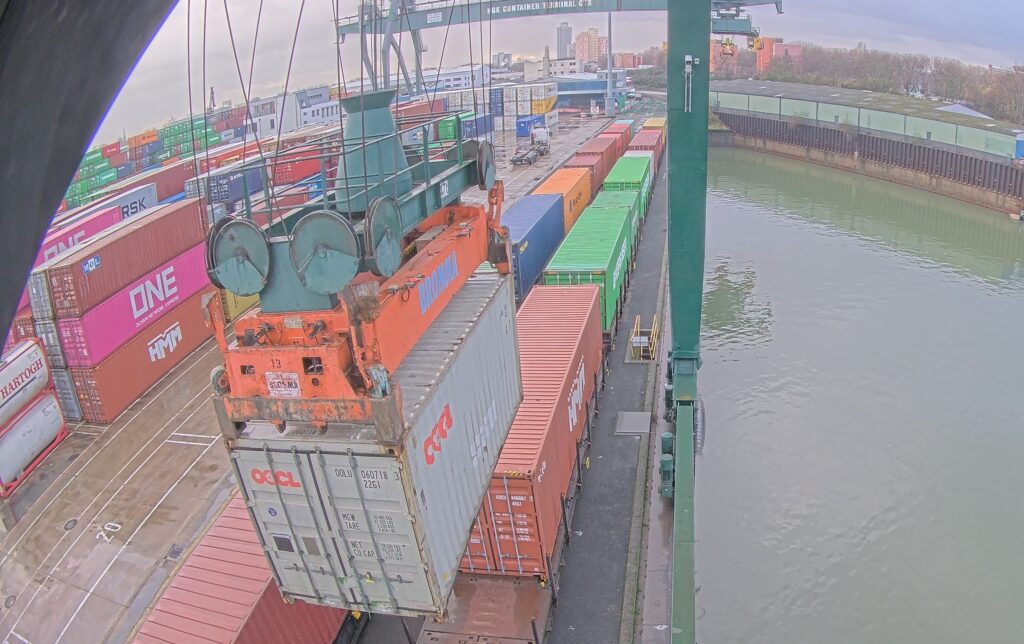
HGK Container Terminal Services operates river cranes that are decades old. Replacing them was not an option. AllRead installed two IP cameras, two lights, an edge server, and a modem (since the crane had no built-in connectivity) to deliver ship-to-shore traceability: BIC code reading on every move, without touching the mechanics. A crane that had been depreciated for years now feeds the TOS with structured data in real time.
Port of Algeciras — OCR provider replacement without civil works
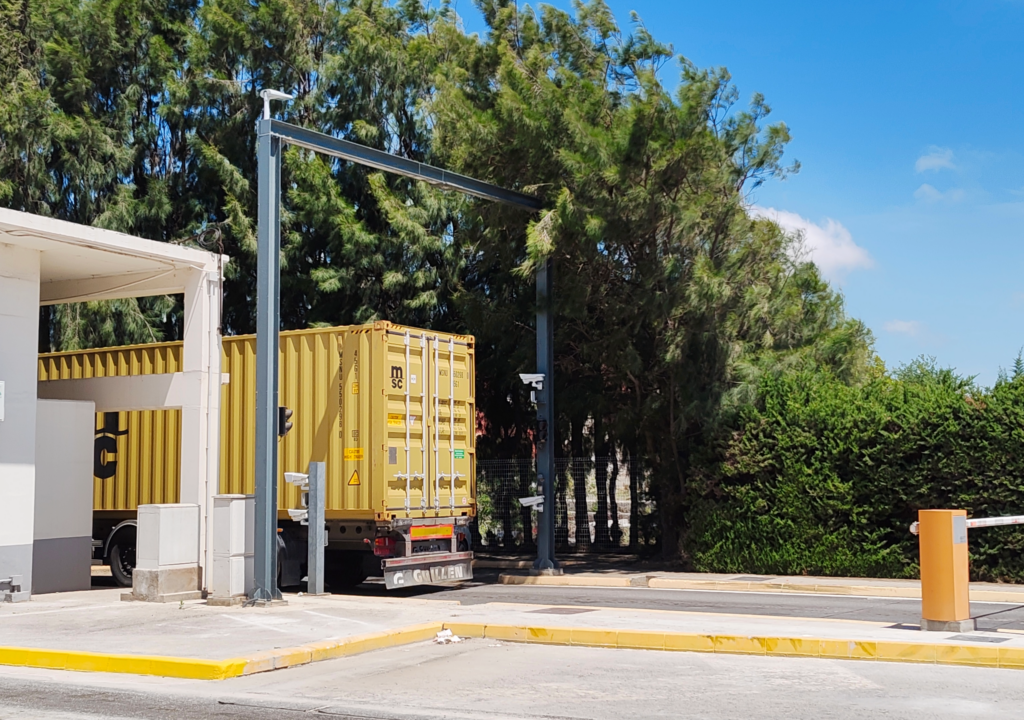
The Port of Algeciras had previously rolled out OCR gates that delivered unsatisfactory results: slow processing times and accuracy below 90%. AllRead replaced the OCR engine to capture license plates, container (BIC), and trailer (ILU) readings, using the same gate.
Traceability and control of goods and the various modes of transport are key to ensuring excellence. AllRead’s solution enables the collection of highly accurate data with very reasonable infrastructure requirements.
Jesús Medina Blanco – Chief Information & Innovation Officer · Autoridad Portuaria de Algeciras (España)
Conclusion: retrofit as a strategic decision
For operations directors, CIOs, and port automation leads, the question is no longer whether to automate, but how. Retrofit — backed by computer vision and deep learning software running on top of existing infrastructure — is today a highly efficient way to close the digital gap.
Are you evaluating an OCR replacement, automating accesses without new gates, or looking to digitalize existing cranes to feed your TOS? Let’s talk. A well-designed retrofit starts by understanding your context.