OCR at the maritime terminal: every movement under control
For a container terminal operator, the gate is the most visible bottleneck and the point of greatest legal exposure on the premises. Every truck waiting in line is lost time for the carrier, wasted capacity for the terminal and unnecessary emissions for the environment. Every container that enters without photographic documentation of its condition is a potential claim with no defense. OCR at the maritime gate acts on both problems simultaneously: it speeds up processing and generates the record that protects the terminal when disputes arise.
Security and regulatory compliance
The impact of OCR on truck turnaround time is one of the best-documented effects in the sector. The turnaround time of a truck — from gate entry to exit — improves by 30-40%, which translates into greater truck availability and better fleet utilization for logistics operators. Moreover, in many cases the main reason for automating the gate is to reduce the associated costs, decrease truck dwell time and eliminate the human-error factor from the process.
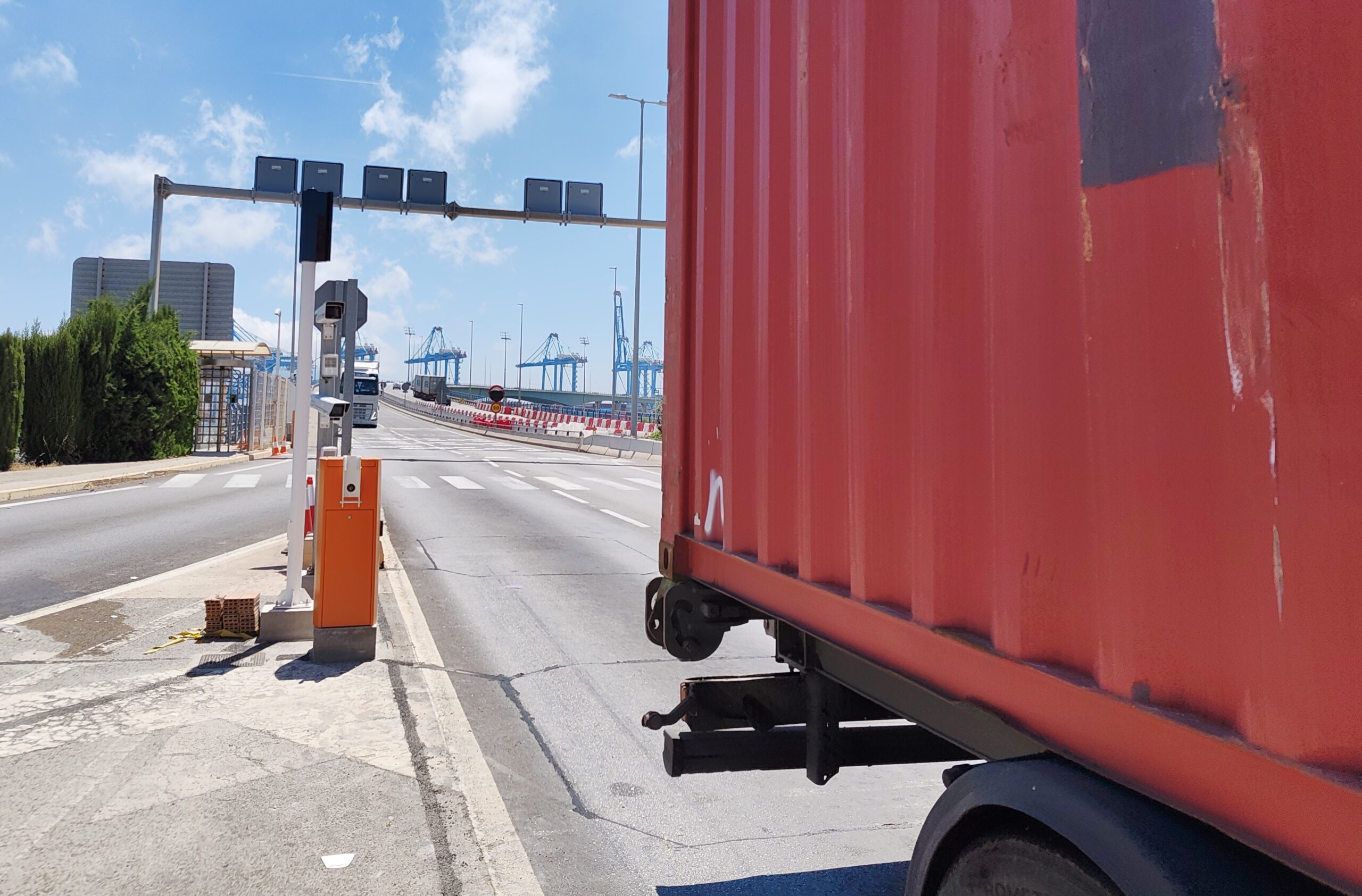
Automated identification speeds up gate movements by up to 50%, according to data from the Port Equipment Manufacturers Association; ports can lose up to 15% of productivity due to manual tracking errors, a gap that automation closes. Reducing turnaround time not only improves the carrier’s experience: it frees up physical space in the yard, because each asset spends less time inside the terminal.
Authorizing entries and exits: the gate as a point of total control
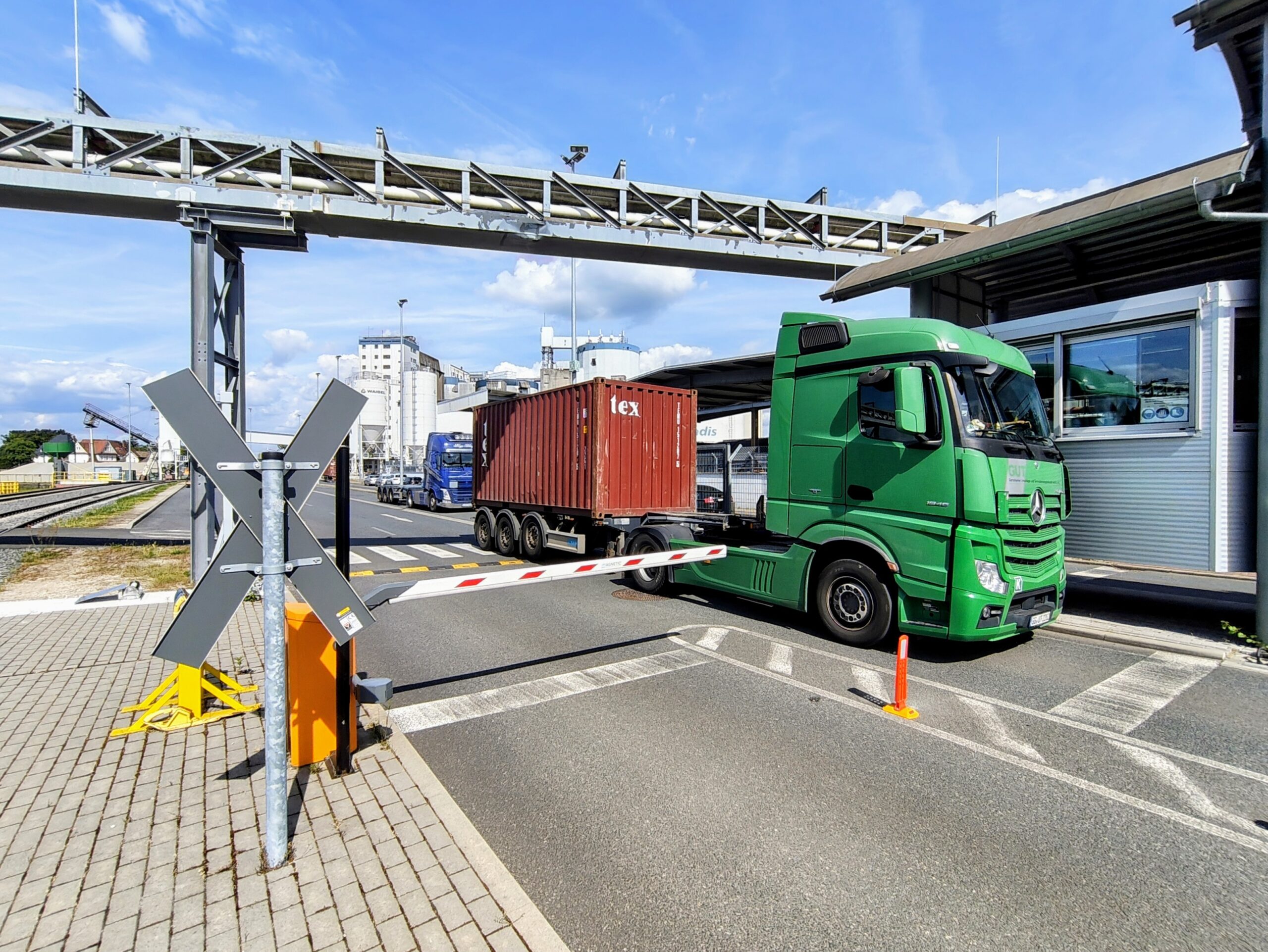
At an automated gate, OCR simultaneously captures the tractor’s license plate, the trailer’s license plate, the container’s BIC code and the IMDG/ADR labels. Typical OCR reads include the truck’s license plate, the container number, the ISO code and the dangerous goods labels; in addition to the codes, the system reads visual features such as seal identification and performs automatic damage inspection. All of that data is cross-checked against the appointment registered in the TOS: if everything matches, the barrier opens automatically. If there is a discrepancy, an exception is generated and managed remotely without stopping the other lanes.
When OCR cannot confidently read a label (due to damage, poor lighting or covered markings), the transaction is redirected to a remote operator for manual review without stopping the entire lane; edge cases are handled efficiently without the need for an operator physically present, preserving the performance benefits of automation.
The risk of an erroneous truck–container association has serious consequences: a misassigned container can leave the premises on the wrong truck or, in the worst case, be loaded by mistake. Even an error rate of 1-2% across thousands of daily movements creates significant downstream problems: delays in identifying vehicles that have exceeded their dwell time, mismatched container records and missing entry logs that directly affect yard congestion, billing accuracy and regulatory compliance. The automatic validation of container and truck attributes improves yard-positioning accuracy, prevents misplaced containers and eliminates exit-gate rejections due to incorrect assignments.
Intra-terminal rail operations
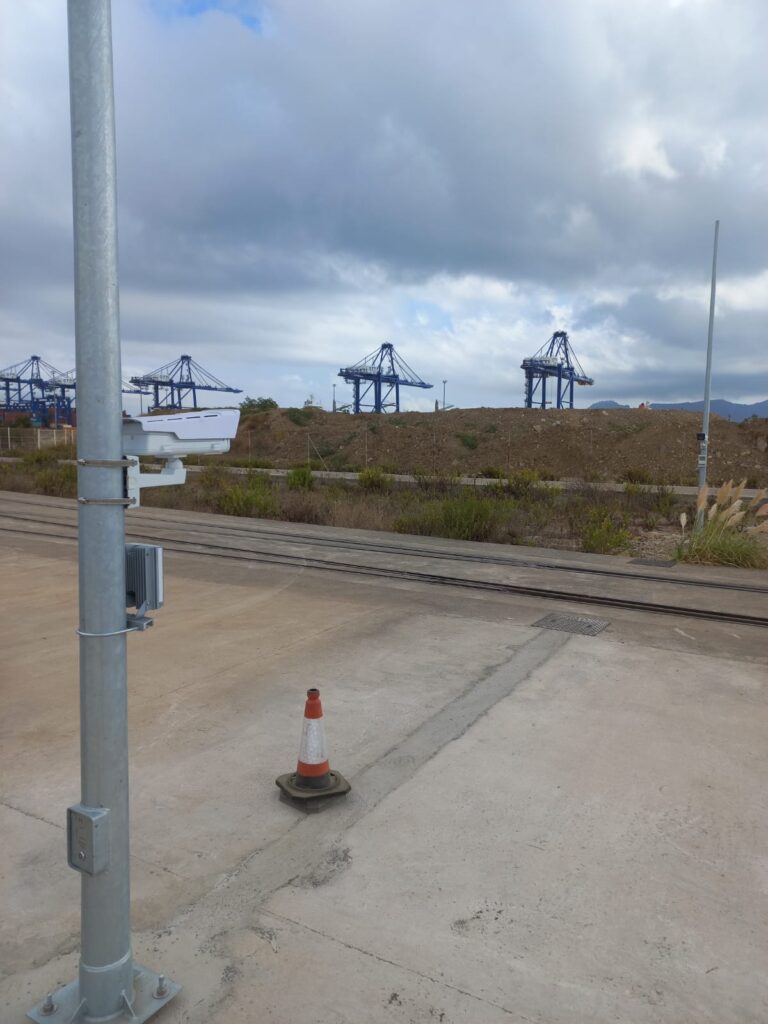
For terminals with integrated rail track, OCR solves one of the most costly problems of the unloading operation: the verification of the train composition. Without automation, confirming that the actual train composition matches the list declared by the rail operator requires an agent to walk the track wagon by wagon. With an OCR system at the track entrance, the complete inventory is available in minutes, before unloading begins.
Knowing which container is on which wagon, in what position and orientation, makes it possible to optimize crane and stacker movements from the very first minute, eliminating system queries and the waits to resolve identification doubts that generate crane idle time. Automation significantly improves operational productivity through reduced turnaround time at the gates, precise positioning of containers by cranes and increased safety via real-time detection of dangerous goods placards.
Forensic imaging: the defense against damage claims
When a customer claims their container arrived damaged at destination, the central question is: in what condition did it enter and leave the terminal? Without systematic photographic documentation, the terminal absorbs costs it did not generate. A gate OCR system provides timestamped visual evidence that protects ports from unfair claims; when a damaged container leaves a port without certified documentation of its condition on arrival, the terminal usually absorbs costs it did not cause.
Modern computer-vision systems simultaneously capture data on the container’s condition, verify ISO codes, detect damage indicators and confirm seal integrity, all in the seconds a truck occupies the gate lane, creating a real-time, timestamped record of the condition of each container at the moment of entry and exit.
The scale of the uncovered risk is significant. In a terminal that processes 500 truck movements a day, if just 2% of the units arrive with undocumented pre-existing damage, that represents 10 containers a day with unresolved liability exposure; over a working month, the accumulated risk is substantial. Structured documentation systems ensure that every image is indexed under the container number, retrievable and shareable within seconds from the moment a claim is filed.
The gate as a competitive advantage
Taken together, a terminal with well-integrated OCR is structurally more competitive: predictable waiting times, eliminated identification errors, the ability to defend itself against claims with digital evidence and greater effective throughput with the same physical infrastructure. For the terminal’s customers — shipping lines, freight forwarders and carriers — gate predictability is a genuine selection criterion: a terminal that processes without queues and without errors retains traffic that another, with a better geographic position but worse landside operations, may lose.