OCR at intermodal terminals: the link between the port and the hinterland
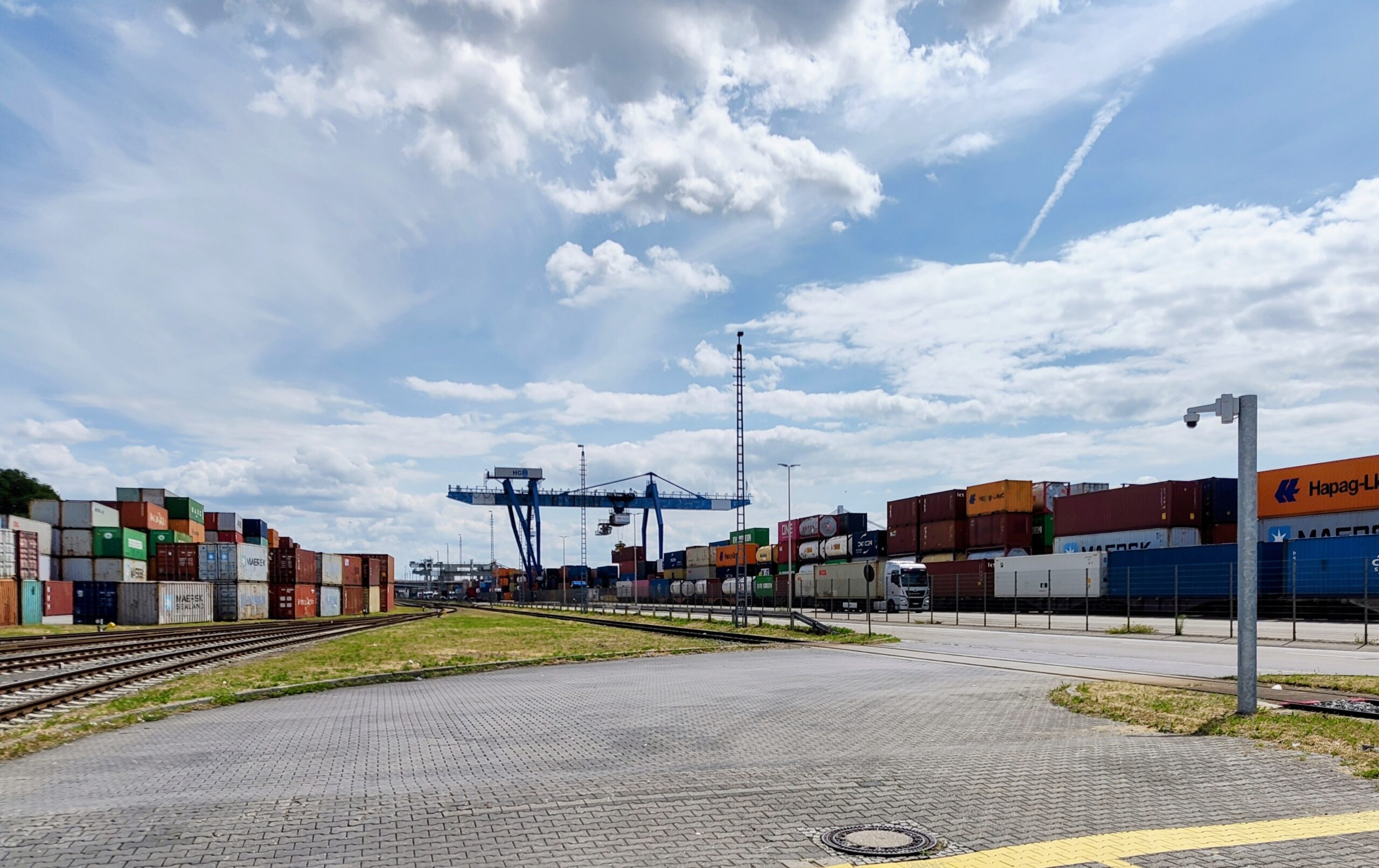
An intermodal terminal, a dry port or a river terminal connects the maritime mode with rail and road. They are the nodes where a container changes from train to truck, or from barge to train, and where the chain of custody fragments among actors whose systems do not always talk to each other.
The operational complexity is comparable to that of a maritime port: identifying containers, trucks and wagons, planning crane movements and maintaining the traceability of every asset. The problem is that high-performance OCR solutions have historically been designed for large ports with proportionate budgets. Intermodal terminals have been the forgotten segment. That is changing.
The blind spot between modes
The central argument for OCR at an intermodal terminal is not speed but the continuity of traceability at the change of mode. When a container leaves the maritime terminal’s TOS and has not yet entered the recipient’s system, no one sees it automatically. The OCR system captures images of the wagons and the cargo as the train arrives, extracts the box and wagon identifiers, and compares the actual composition with the expected one; any discrepancy automatically generates an exception-management event. If a container is missing or one arrives that should not, the system detects it before the crane starts working. If a box arrives damaged, the information can be shared with third-party systems before the terminal has even unloaded the train.
BIC, UIC and ILU: three codes in the same yard
At an intermodal terminal, three coding systems coexist depending on the transport mode. The BIC code (ISO 6346) identifies maritime containers. The UIC code identifies railway wagons; Rail OCR systems are compatible with European UIC numbers and with AEI-tagged wagons from the United States and Australia. The ILU code is applied in Europe to swap bodies and grabbable semi-trailers: its structure is identical to that of the BIC, with an owner key, a registration number and a check digit.
A modern system trains its AI models to locate and read BIC and UIC codes simultaneously from a dataset rich in images of wagons and containers. The same camera can see a maritime container, the wagon carrying it and a swap body: the OCR must resolve that ambiguity in real time.
Main applications
Road access control
Reading of the BIC, the tractor’s license plate and IMO/ADR indicators, with automatic opening of the barrier against the TOS. The integration of OCR and pre-advice reduces truck dwell time and enables contactless processing.
Full-train reading
As they pass through the gate, the cameras instantly record the identifier of each container or semi-trailer and the wagon number; the train’s complete inventory becomes available immediately, eliminating the slow visual checks by rail agents.
Crane–truck coordination
OCR identifies the truck and its position; the system sends the crane the order to place the container onto that trailer without manual validation. If the cargo does not match the truck or the work order, the truck cannot leave the terminal.
Exit verification
As the train departs, the OCR system verifies that the boxes are in acceptable condition when they leave the facility, protecting the terminal against claims for damage caused during subsequent transport.
Lightweight OCR: accessibility for mid-sized terminals
Only 1% of the world’s ports are fully automated; the main barrier is financial, especially for smaller facilities. Advances in AI are opening up more cost-effective alternatives: with machine-learning algorithms and advanced image processing, ports can automate operations over their existing camera networks, with no infrastructure upgrades. A terminal can add OCR as a software layer, without the capital commitment that historically made it unviable.
The river terminal: specific conditions
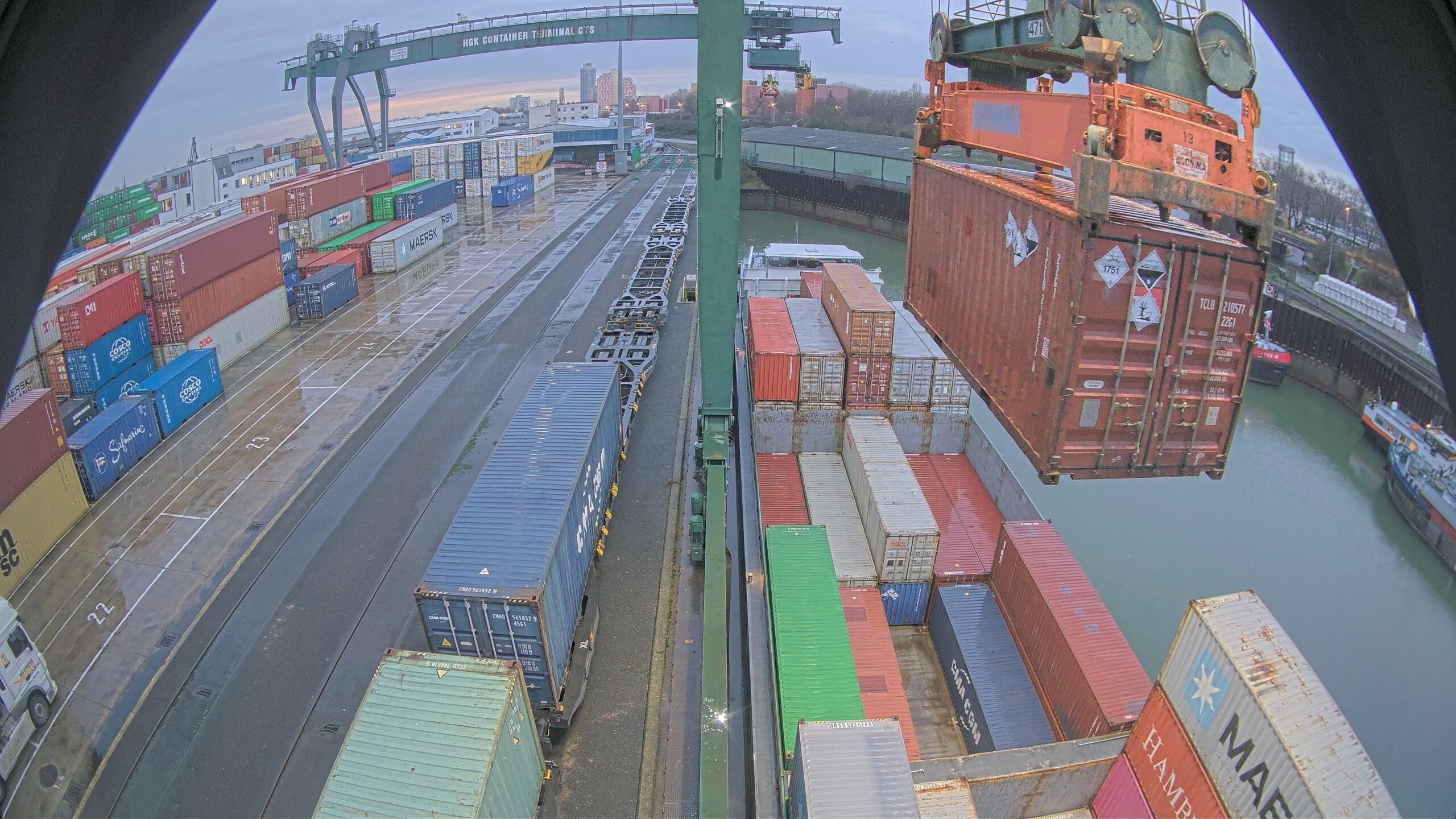
In ship-to-shore crane operations, operators have no way to verify the condition of the containers; once set down, they are considered accepted as undamaged, even when they are not. OCR integrated into the crane spreader closes that vulnerability in real time. Added to this are the frequently nighttime operation and the reduced workforce: modern systems operate reliably in backlight, rain and nighttime conditions. At a river terminal, that capability is not a premium feature: it is a basic requirement.
Traceability as legal protection
The most underestimated benefit is not gate speed but the ability to attribute responsibility. When a container arrives damaged after passing through several modes and terminals, determining who caused the damage becomes litigation. Traceability systems implemented alongside the TOS offer greater transparency and asset visibility, which translates into faster decisions and greater trust among key stakeholders. Each timestamped image at every change of mode is a liability cut-off point: for a terminal operating as an intermediary between shipping line, rail operator and carrier, that documentation turns a dispute into a brief conversation.