OCR applications in ports and terminals:
When we talk about OCR applications in ports and terminals, we are referring to the use of computer vision to automate the detection and identification of intermodal transport units at every point where an asset changes hands.
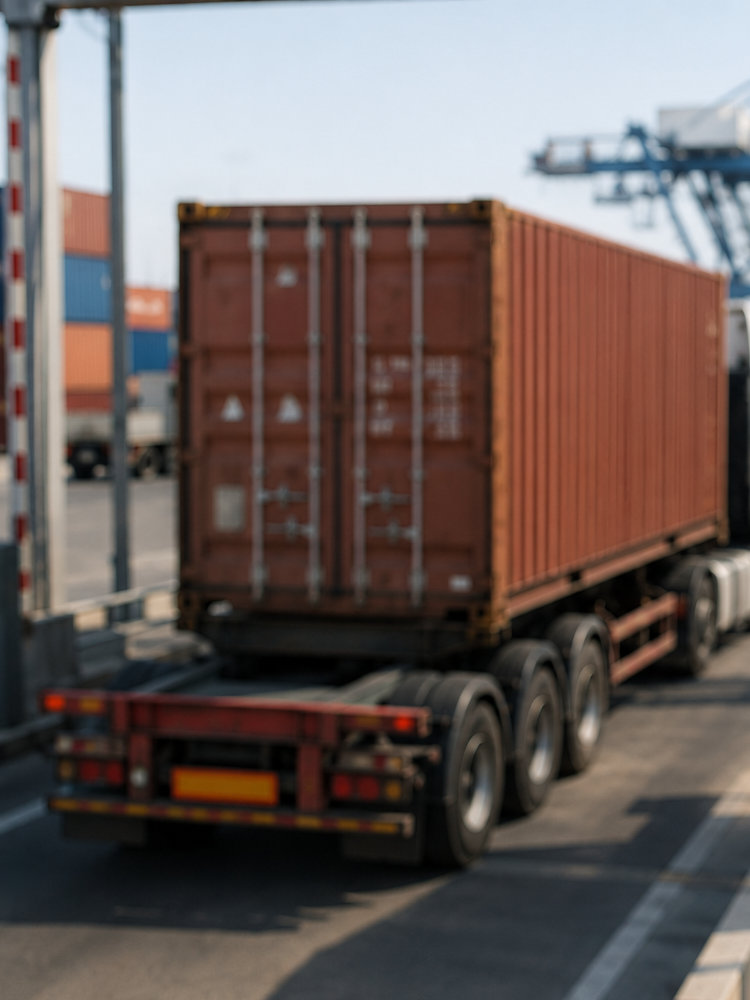
Specifically, this means reading container codes, license plates, wagon numbers, RoRo trailers or dangerous goods at the road entry gate, the rail crossings, the quay crane and even internal yard movements, followed by the immediate transmission of the data to the information system for the automatic execution of the corresponding operation: access or exit permission, loading order to the crane, recording the data for later use…
The value that OCR brings to a port environment
Behind every automated detection lies a well-defined set of operational benefits. OCR applications in ports and terminals contribute, fundamentally, to:
Security and traceability
Control of the assets entering and leaving the premises, ISPS Code compliance at critical infrastructure and forensic logging of every movement.
Operational efficiency
Fewer stops, fewer manual errors, fewer bottlenecks at the gate and in intermodal operations
Reduction of manual processes
The operator no longer keys in license plates or BIC codes and can focus on higher value-added tasks
Forensic evidence against damage claims
Timestamped images of each side of the container at every pass through the terminal.
Reduction of bottlenecks and CO₂
Less engine-idling time in the gate queue translates directly into lower emissions.
Information extraction modules
A modern port OCR solution does not merely read a number; it combines several recognition modules that can be activated according to the terminal’s use case:
- BIC (ISO 6346): reading of the container code with automatic calculation of the check digit.
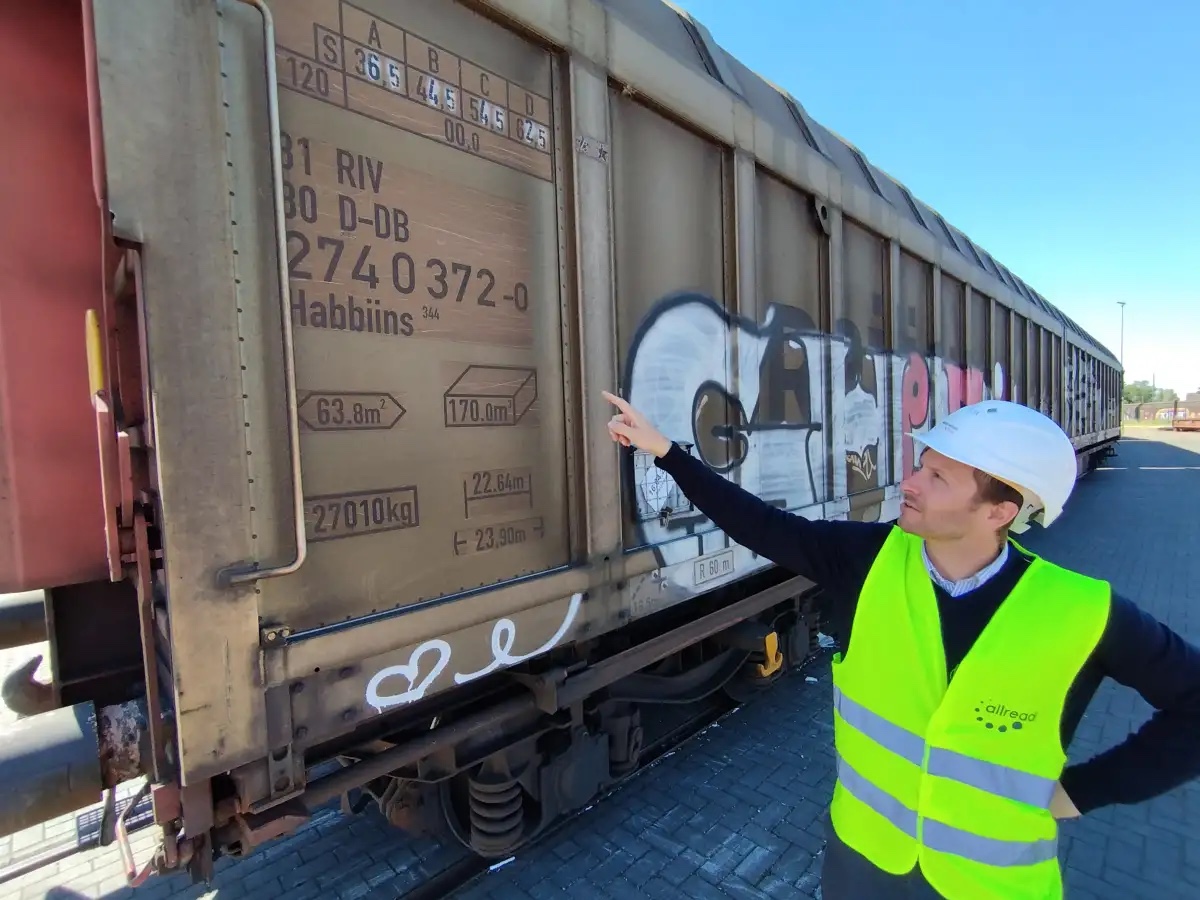
- UIC: UIC reading of railway wagons for rolling-stock identification.
- Tractor and trailer license plates: license plate recognition on port trucks, with multinational coverage.
- ADR / IMDG: detection of dangerous goods placards, UN number and hazard identification number.
- Seal presence: visual verification of the security seal on the container door.
- Damage detection: identification of visible deformations, dents or breakages on the container.
AllRead's agile model
Port OCR over the past three decades has been defined by its infrastructure: a metal gantry, six or seven linescan cameras, proprietary hardware, presence detectors, civil works, weeks of installation. It works — but at a cost in money, space and rigidity.
AllRead starts from a different premise.
Where others lead with hardware, AllRead leads with intelligence. The deep learning engine is the core of the system — everything else is built around it. That means standard CCTV cameras, conventional lighting, no dedicated gantry infrastructure, no significant civil works. Not because AllRead cuts corners on quality, but because the software does the heavy lifting that hardware used to do.
The result: a total cost of ownership more than 60% lower than that of conventional OCR installations – across acquisition, deployment and long-term maintenance – without compromising accuracy or operational performance.
And more importantly: it changes the nature of what is being invested in. A traditional OCR gantry is a fixed installation. AllRead is a platform: add control points without new civil works, evolve your capabilities as the terminal evolves, switch camera suppliers without lock-in. The infrastructure you build today remains relevant tomorrow.
Each stakeholder (port authority, maritime terminal, intermodal terminal, rail terminal or container depot) activates the OCR system it needs and integrates the data with its management system.