OCR at the rail terminal: every train read on the move
Port rail operations have a particularity that sets them apart from the road gate: trains do not stop to be identified. There is no barrier to lift, no driver to wait. The reading has to happen on the move, on both sides of the train, at real operating speeds within the premises. That is the technical challenge that defines the entire system design.
The problem that OCR solves: the manual train inventory
Without automation, identifying the composition of a train that has just entered the terminal requires a rail agent to walk the track wagon by wagon, note each code by hand and check it against the train composition declared by the operator. It is a slow task, prone to error and physically risky. Rail OCR systems eliminate the need to carry out train inventories manually. The OCR system does that work in the minutes it takes the train to cross it, without anyone going out onto the track.
How Rail OCR works: reading at real speed
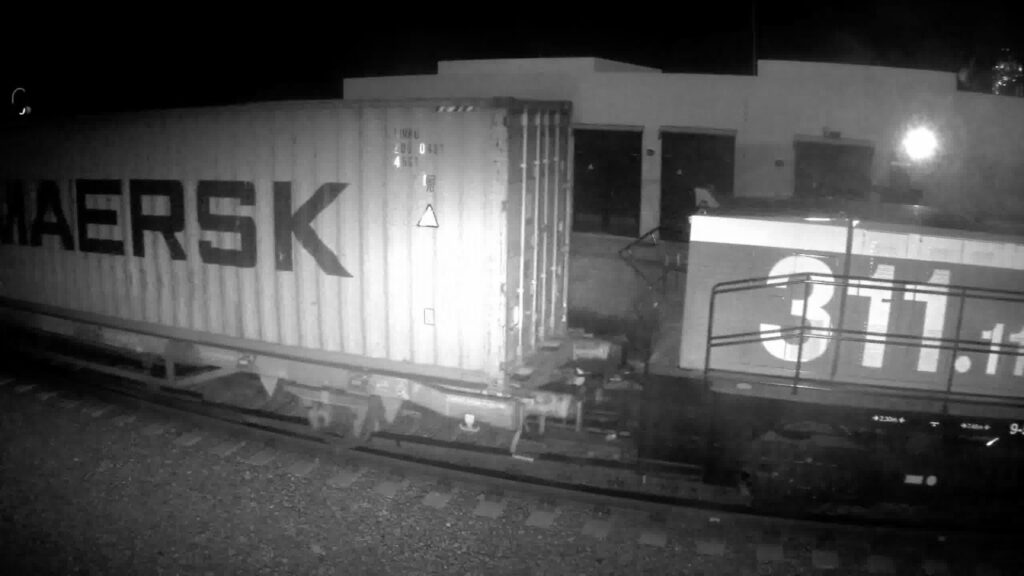
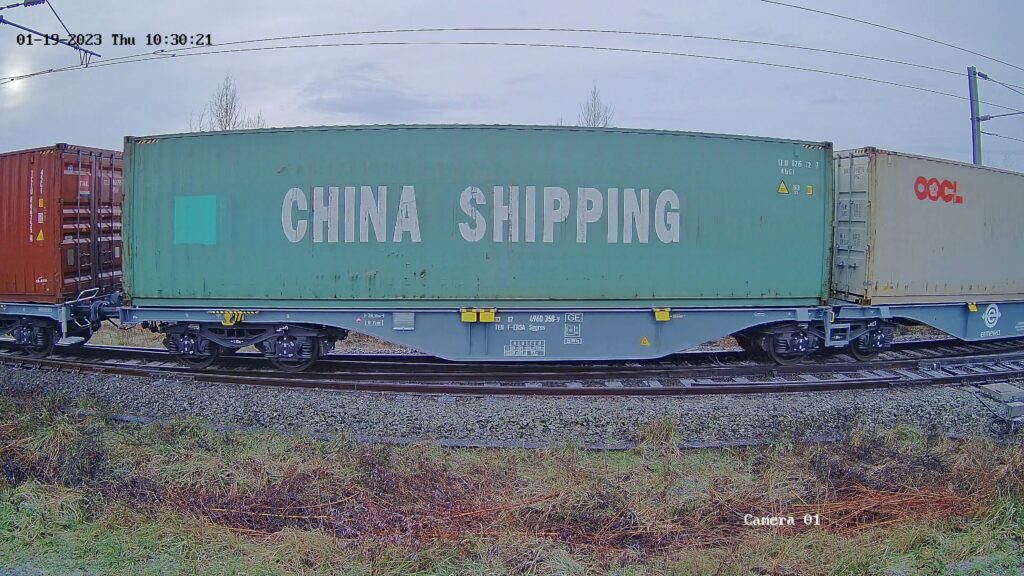
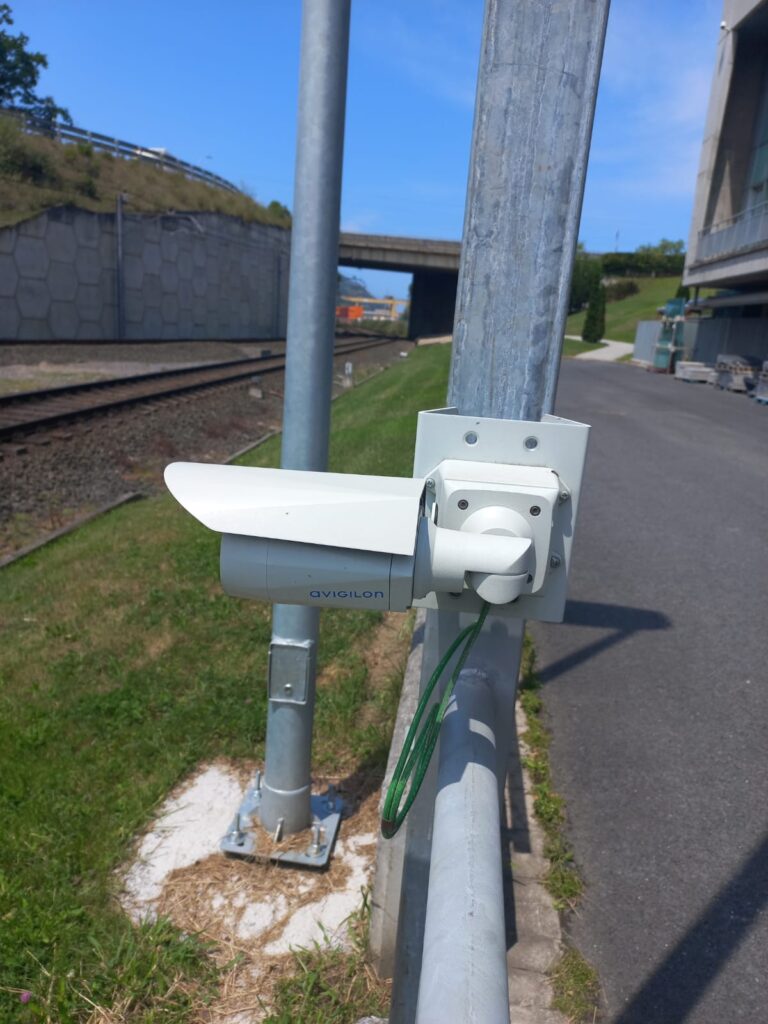
The rail OCR system is a structure installed over the track, equipped with cameras and floodlights. As the train passes at operating speed, the system captures high-resolution images of the sides of wagons and containers, extracting key information in real time.
Modern Rail OCR systems achieve recognition rates typically above 98% in container and wagon identification, with image processing and machine-learning algorithms that ensure reliable capture even at high speed or in low-light conditions.
What information the system extracts at each pass
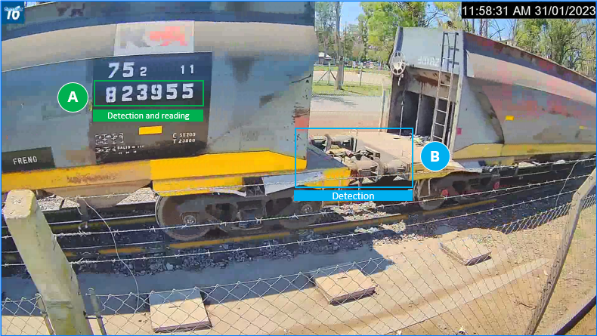
The gate captures data such as container and trailer numbers, ISO codes, the wagon identifier, tare, payload, cargo type and ADR/IMDG/UN dangerous goods labels. Beyond the identifiers, the Gate‘s ceiling cameras capture images of the containers’ roofs as they pass, extending visibility to a third face of the cargo. The exact position of each container on its wagon — a key data point for planning the crane’s unloading sequence — is recorded and sent to the information system (PCS, TOS, CMS…) automatically, with no need for manual intervention.
Dangerous goods: from the placard to the database
The automatic reading of ADR and IMDG labels is one of the use cases with the greatest regulatory implications. Under the ADR Agreement, dangerous goods transports are marked with orange placards indicating the hazard class and the substance’s identification number; OCR systems must process high-resolution images, often of low quality, in real-world conditions, which requires robust and efficient systems. The practical result is that each hazardous load is automatically associated with the corresponding wagon and container, generating the documentary record the regulation demands without manual intervention.
Checking against the Bill of Lading: detecting the discrepancy before unloading
A preloaded list of trains and containers from the origin terminal is compared with the data captured by the OCR cameras, allowing the system to associate each container with a specific train number and determine its exact position on the wagon. If the actual composition does not match the declared one — a container is missing, there is one too many, or a wagon has changed position during shunting — the system detects it and generates an alert before the crane starts working. This avoids the most costly scenario in rail operations: searching for a container that never arrived, or unloading in the wrong order because the actual position differed from the planned one.
Safety: no one is on the track while the train passes
The operational benefit that is hardest to quantify, but most important in human terms, is the reduction of personnel exposure in the track environment. OCR systems allow operators to remotely inspect and verify container numbers, cargo details and wagon condition; this remote capability not only increases efficiency but also improves safety by reducing the need for manual inspections on the track. The complete container and wagon inventory list is obtained without any agent having to walk alongside the moving train, eliminating exposure to the most direct risk of port rail operations.