AllRead Is Building Vessel Identification for Inland Port Calls
Every container terminal runs on a chain of identifications. A truck arrives, its licence plate is read. A container passes through, its BIC code is captured. A wagon rolls in, its UIC code is logged. Each of these checkpoints exists because a terminal cannot manage what it cannot see, and for years, ports and rail terminals have been closing that gap checkpoint by checkpoint.
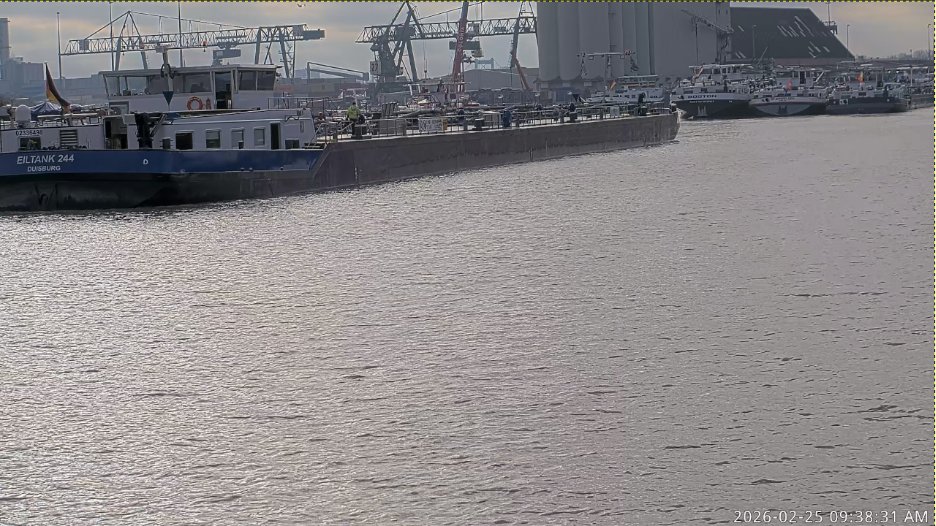
Inland terminals have a checkpoint the rest of the industry rarely talks about: the vessel itself. Many inland and intermodal terminals sit on rivers and canals, and every port call by a barge or inland vessel still has to be registered, matched to a name, an IMO or ENI number, a schedule, a berth. In most inland terminals today, that registration is still a manual step. Someone reads the name painted on the hull, cross-checks it against a shipping schedule, and enters it into the terminal’s systems by hand.
It is the same category of problem AllRead has spent years solving at the gate and on the rail line: a piece of physical, analogue information that has to be turned into structured data before a TOS or PCS can do anything useful with it. The difference is that, unlike a container’s BIC code or a wagon’s UIC code, vessel identification at inland terminals has largely stayed outside the scope of automated reading systems, which have historically been built for road and rail, not for the waterway leg of the chain.
A gap that grows with inland traffic
Inland waterway transport is not a marginal use case. As European ports and terminal operators look for ways to shift volume off congested road networks, rivers and canals are increasingly part of the answer, which means more vessel calls, more manual registration, and more pressure on staff to keep records accurate and current. A missed or delayed vessel registration does not just create an administrative backlog; it affects the calculations for costs related to the vessel time spent at the port.
This is the operational gap our team is working on: giving inland terminals a way to identify a vessel automatically, at the moment it arrives, and feed that identification directly into the terminal’s own systems, the same principle behind ARS© Road and ARS© Rail, applied to a checkpoint that has not had an equivalent solution until now.
What we are building
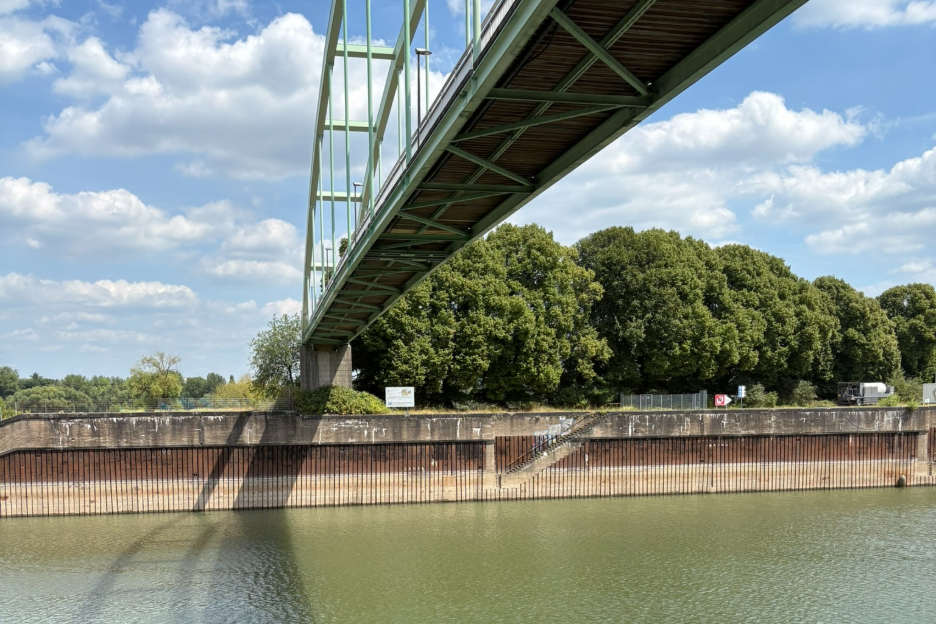
The project is still early. There is real ground left to cover before this reaches production. What we can say today is the shape of the approach: applying the same patented computer vision technology that reads container BIC codes, wagon UIC codes, and vehicle licence plates, to the problem of identifying a vessel at the point of a port call.
The goal is consistent with how AllRead approaches every reading problem: low infrastructure, on-premise deployment, and direct integration into the terminal’s existing TOS or PCS, rather than a parallel system the terminal has to maintain on its own. We are not there yet. What we have is a model in development and a clear operational problem worth solving.
Why we are being specific about what this isn’t
AllRead’s strongest content has always come from being precise about what is proven and what is still in progress, the seal-reading project is a good example: we published what worked, what didn’t, and why we changed direction. This is the same discipline applied earlier in a project’s life. Vessel Identification for Port Calls is not a finished product, it has no accuracy benchmark to report yet, and it is not attached to a named client or terminal. What it is: a real, active piece of R&D that extends AllRead’s core capability, turning physical, hard-to-read information into structured data, into a part of the terminal that has largely been left out of the automation conversation so far.
What it means for inland terminal operators
If your terminal handles inland waterway traffic alongside road and rail, the underlying problem will be familiar: another checkpoint, another manual step, another place where information has to travel from a person’s eyes to a screen before anything downstream can happen. That is precisely the category of problem AllRead’s technology has been built to remove, first at the gate, then on the rail line, and now, as this project develops, at the point where a vessel makes its call.
We will share more as the project moves closer to production. In the meantime, we are glad to talk about the shape of it, the reasoning behind it, and where it might fit within your terminal’s own automation roadmap.